Posts

Why you shouldn’t just put up with lower back pain!

Image
You would think that if somebody was in pain that they would seek help to try to improve or get rid of it.... Amazingly though , people more often than not, just simply put up with it for long periods of time. This is very frustrating as a Physio and but more importantly, there is good reason why you should get it looked at sooner rather than later. Don’t take my word for it! This is what the research says: Wand et al (2004) found that early Physiotherapy is very important in acute lower back pain. They found that it was more effective than just getting advice to stay active. Early Physiotherapy lead to a more rapid improvement in function, mood, quality of life and general health. Even more importantly getting early Physiotherapy helps to prevent the development of psychosocial features, which a massive problems for developing long standing chronic lower back pain. This was also supported by Mo-Yee Lau et al (2008) who found that early physiotherapy was effective ...
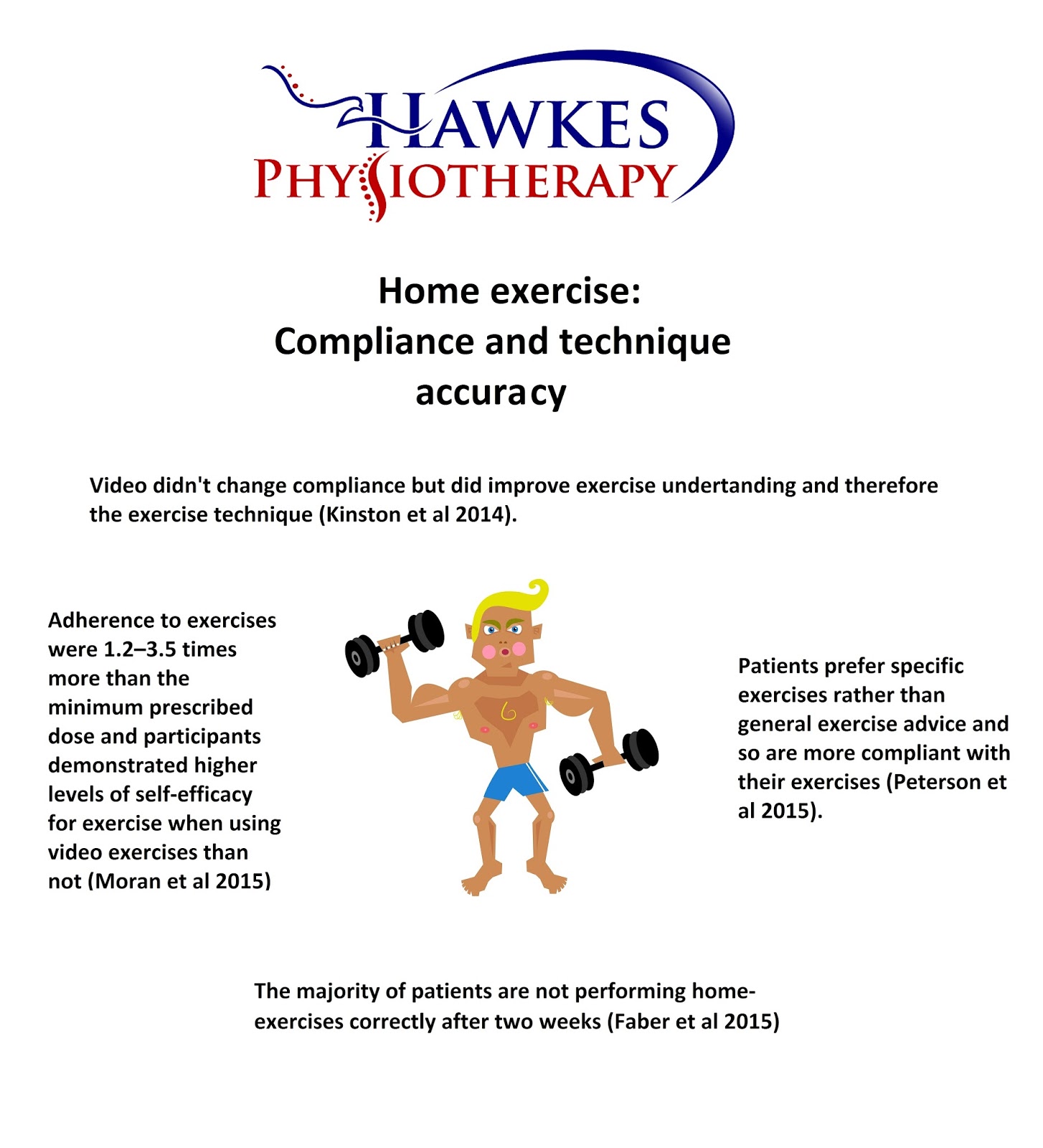
Home Exercise: Compliance and technique accuracy infographic

Image

Lower back pain update post 2013

Image
You may have previously read my article on lower back pain back in 2013 but like all things ‘Physio’, the research keeps coming. So I thought that this subject needed an updated article based on the most recent evidence out there. So what I have done is only looked at research published from 2013 to now.   Causes:   Weight: How many of you have been to the G.P. and they said if you lose weight it will help your back pain? Well the research has found that a relationship between back pain & weight doesn’t exist (Woolner & Dean 2013).   Muscle imbalance: Muscle imbalance relates to muscle that work together being unbalanced meaning some are weak, some are tight some are long etc. Arbanas et al (2013) found that there is an increased activity of the Psoas Major muscle (hip flexor) in Lower Back pain patients. But is this Cause or effect or both? Bending too much? How many people have been told this? I probably have told this to patient...

The effects of aging on the body infographic

Image

100 not out! My 100th blog post

Image
Amazing! I would never have thought that when I qualified as a Physiotherapist back in 2004 that I would write anything other than my patient notes, never mind write a blog! Yet here I am on my 100th blog post! I must say that I enjoy writing them and it is great doing all the research for every post. What I have found trawling through all the latest evidence is that things change, especially since I trained from 2001 to 2004. I would strongly advise any physiotherapist to take up writing a blog because many times over I have actually disproved some of the theories and ideas that I was taught when I was at University. It seems that a decade is a long time in Physiotherapy! It's not all for me though..... Although some articles are complex and probably more tailored to my fellow professionals I hope that some are useful and helpful to my patients and the general public. If anyone wants to give me any feedback or even tell me something that they want me to cover, then I would ...

Acupuncture for Achilles tendinopathy

Image
Achilles problems are quite common, De Jonge (2011) found that the annual incidence of Achilles tendinopathy is 2.01 per 1000 people. In runners the incidence ranges from 9.1% to 10.9% (Lopes et al 2012). Achilles ruptures typically occur in males in their 30's and 40's who play sport intermittently (Khan & Carey Smith 2010). Now we already know that Achilles tendinopathy needs to be treated with exercise based therapy and the evidence highlights that this is the most effective approach. However we always need a plan B just in case Plan A doesn’t really work or is difficult to achieve for whatever reason. To see the usual care for Achilles tendinopathy click here: http://mathewhawkesphysiotherapy.blogspot.co.uk/2014/02/your-achilles-heel.html?view=flipcard So what acupuncture points are regularly used for Achilles tendinopathy? Local points: Increased collagen synthesis and reorganisation requires that at least one acupoint is anatomical...

Osteoporosis Infographic

Image